

Embracing Ayurveda for Optimal Gut Health
Bloating, acid reflux, and irritable bowel syndrome are among the most common health complaints in the modern world — and their impact goes well beyond the digestive system. That heavy, foggy feeling after every meal, the sharp cramps that linger for hours — they quietly drain your energy and steal your joy.
Ayurveda, the traditional health system that originated in India thousands of years ago, takes a fundamentally different approach: rather than managing symptoms, it seeks out their root cause. Central to this approach is the belief that gut health underpins the health of the entire body and mind — that strong digestion supports clear thinking and emotional balance.
The word Ayurveda translates as “science of life.” Its practice is built around the concept of Doshas — individual body types that determine how we process food, stress, and the world around us. Rather than offering a universal solution, Ayurveda tailors its guidance to your specific constitution, giving you targeted tools to strengthen digestion and maintain long-term gut health.
Across the UK, interest in Ayurveda is growing steadily — and it’s no surprise. As chronic, lifestyle-related illnesses place an increasing burden on the nation’s health, more people are turning to holistic, preventative, and truly personalised approaches to wellness.
Key UK Gut Health Statistics, Insights & Trends (2025–2026)
Here are key statistics and insights regarding Ayurveda and gut health in the UK:
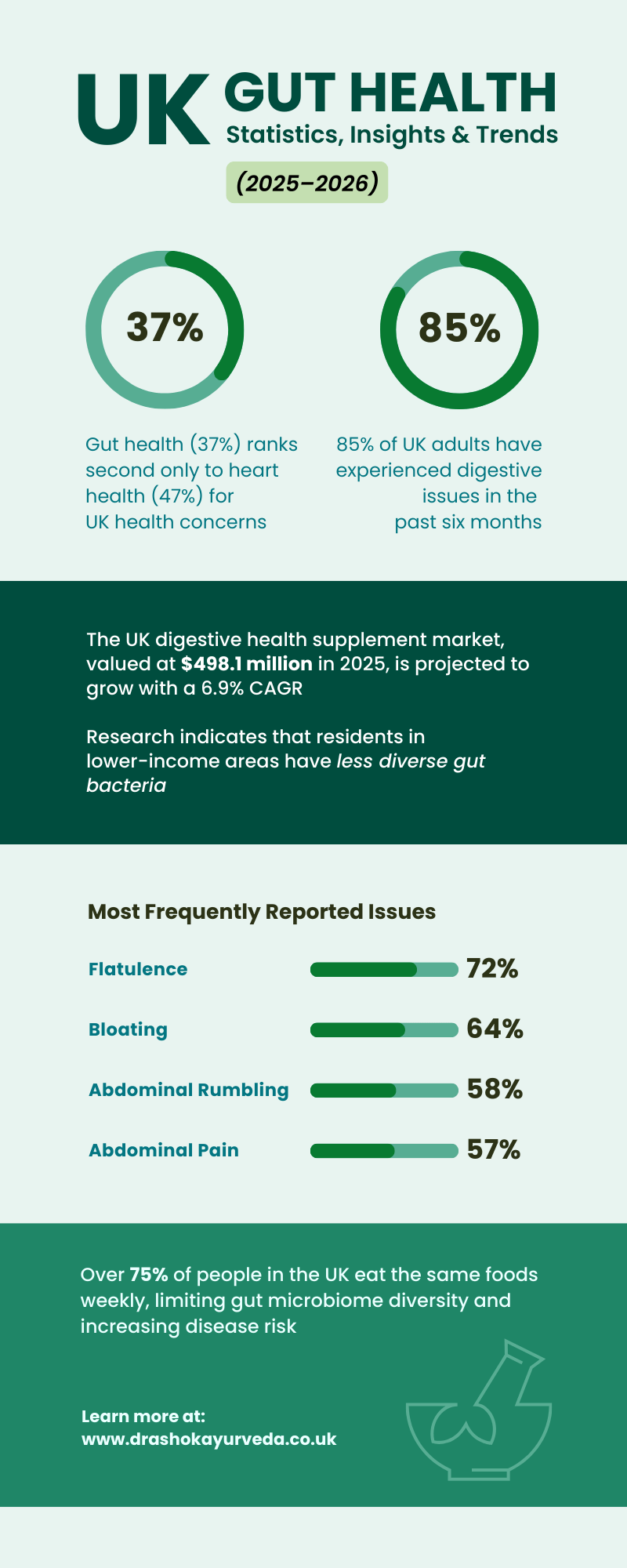
- Gut health (37%) ranks second only to heart health (47%) for UK health concerns, according to Tesco’s January Trends Report 2025
- Approximately 85% of UK adults have experienced digestive issues in the past six months, according to a 2025 Mintel report
- The UK digestive health supplement market, valued at $498.1 million in 2025, is projected to grow with a 6.9% CAGR, reports Grand View Research.
- Over 75% of people in the UK eat the same foods weekly, limiting gut microbiome diversity and increasing disease risk, finds Bowel Research UK.
- Research indicates that residents in lower-income areas have less diverse gut bacteria, according to research from King’s College London.
- The most frequently reported issues include flatulence (72%), bloating (64%), abdominal rumbling (58%), and abdominal pain (57%), notes the National Institutes of Health.
- ~75% of people eat the same foods weekly, causing low microbiome diversity, a study by Bowel Research UK
Understanding the Importance of Gut Health
The Gut-Brain Connection
The gut-brain connection, often called the gut-brain axis, is a two-way, 24/7 communication “phone line” between your brain and your digestive system (the gut).
In simple terms, it means your brain and your stomach are in constant conversation, and they can directly influence each other’s health and your overall mood.
If you have chronic gut issues (like IBS), it might not just be a stomach issue; it could be linked to stress or anxiety. Similarly, mental health issues can sometimes be improved by supporting your gut health.
Signs of an Unhealthy Gut
Symptoms of an unhealthy gut can vary, but they typically include digestive disturbances such as bloating, gas, diarrhea, or constipation. Other typical signs are chronic fatigue, unintentional weight changes, and skin ailments like eczema or acne.
An imbalanced gut may also have repercussions on mental health, manifesting as anxiety or depression. In addition, a weakened immune system and recurrent infections can be signs of inadequate gut health.
Recognizing these symptoms early is vital for making necessary adjustments to diet, lifestyle, and exploring medical options to restore a healthy balance within the digestive system.
Key factors that affect your gut health
Stress levels, sleep quality, physical exercise, and nutrition (high fiber, low processed foods) are important factors influencing gut health. Environmental conditions, hydration, and the usage of antibiotics are also important considerations. While ultra-processed meals and long-term stress can harm the microbiome, a diet rich in plants, varied, and balanced promotes gut health.
Ayurvedic Principles for Digestive Health
The Concept of Agni (Digestive Fire)
According to Ayurveda, good digestion is key to being healthy. Agni, which means “fire” in our body, helps break down the food we eat. When Agni works well, our body can absorb nutrients and stay clean from waste. But if Agni is weak, it can lead to tiredness and illness. Agni acts like a steady flame in our belly, turning food into energy and clearing out leftovers. Weak Agni can make us feel less hungry or sleepy after meals, just like how modern science talks about digestion and enzymes.
The Culprit: Understanding Ama (Toxins) in the Gut
Ama is a sticky waste that builds up when our digestion isn’t working well, like clogs in pipes. This buildup can cause problems like tummy swelling and make it hard for our bodies to absorb nutrients. It can also lead to issues like joint pain and brain fog. In Ayurveda, we can identify Ama by its signs, like a thick white coating on the tongue or feeling tired and bloated. One woman improved her energy by drinking ginger tea daily, which helped her clear out Ama.
Doshas and Their Influence on Digestion
Doshas are the energies in our bodies that affect how we feel and how our guts work. There are three main types: Vata, Pitta, and Kapha. Vata is like the wind, bringing movement, but too much can cause gas and changes in bathroom habits. Pitta is the fire; when it is out of balance, it can lead to heartburn or loose stools. Kapha is more grounded and steady, but if it’s too strong, it can make you feel heavy and slow down digestion.
Knowing your main Dosha can help you adjust your habits for better health. You can take a quick quiz online or think about your traits. If you have dry skin and often worry, you’re mostly Vata. If you become easily angry and sweat a lot, you are likely Pitta. If you’re calm but gaining weight, then you’re Kapha. Balancing these Doshas can make your digestion smooth. This personal approach is what makes Ayurveda great for your gut health.
Dietary Recommendations for an Optimal Healthy Gut
Ayurvedic Foods for Digestion
- Spices: Ginger (particularly in the form of ginger tea or fresh ginger combined with lime and salt), cumin, coriander, fennel seeds, turmeric, and hing (asafetida) stimulate digestion.
- Probiotics/Dairy: Buttermilk is highly endorsed for alleviating indigestion and bloating, alongside warm milk and ghee, which provide comfort to the digestive system.
- Warm Cooked Foods: Soups, stews, and steamed vegetables are preferred over raw, cold foods, which hinder digestion.
- Grains and Pulses: Light, easily digestible options such as mung dal (yellow mung beans) and basmati rice are optimal.
- Fruits: Ripe, warm, cooked fruits like apples, stewed pears, or papaya.
- Healthy Fats: Ghee and coconut oil support gut health and mitigate inflammation.
Ayurvedic Digestive Rituals
- Warm Water: Drink warm water throughout the day or 20-30 minutes before meals to stimulate metabolism.
- Avoid Cold: It is advisable to avoid ice water and cold foods, as they weaken the digestive fire.
- Lunch is Key: The largest meal should be taken at lunch (12:00–1:30 PM) when the digestive fire is most robust.
- Food Combining: Avoid the combination of raw and cooked foods, or mixing milk with fruits.
Herbal Remedies for Indigestion
- Ginger-Lime Mix: A combination of grated ginger, lime juice, and mineral salt before meals activates digestive enzymes.
- Herbal Teas: Consuming ginger or cumin tea after meals aids in digestion.
- Buttermilk Tonic: Buttermilk mixed with a 1/4 teaspoon of garlic paste.
Lifestyle Practices for Gut Wellness
Daily Routines and Their Impact on Digestion
A thorough gut wellness regimen emphasizes regular timing, adequate hydration, fiber-rich foods, physical activity, and stress reduction to nurture the microbiome and improve digestion. By enhancing the gut-brain connection throughout the day, you can alleviate bloating, boost energy levels, and foster improved sleep quality.
Below is a daily schedule for achieving optimal gut health, organized by time of day:
Morning: Activation & Hydration
- Wake Up (6:30 AM – 7:30 AM): Start with 16–20 oz of warm water with lemon or ginger to rehydrate and stimulate the gastrocolic reflex.
- Sunlight & Movement (7:30 AM – 8:00 AM): Get 10–15 minutes of natural sunlight to reset your circadian clock. Follow this with gentle movement like a brisk walk or yoga to encourage bowel motility.
- Breakfast (8:30 AM): Prioritise a high-fibre, high-protein meal (e.g., Greek yoghurt with chia seeds and berries).
Tip: Delay coffee for at least 60 minutes after waking to avoid irritating the gut lining on an empty stomach.
Daytime: Fueling & Mindfulness
- Hydration (Ongoing): Sip water steadily throughout the day, aiming for at least 8 glasses total. Avoid large amounts of water during meals, as it may interfere with digestive enzymes.
- Lunch (12:30 PM – 1:30 PM): Aim for “30 plant points” a week by diversifying your plate with different grains, legumes, and colourful vegetables.
- Afternoon Snack (3:00 PM): Choose polyphenol-rich foods like nuts, dark chocolate, or berries to feed beneficial bacteria.
- Mindfulness Break: Practice 5 minutes of deep breathing or box breathing to lower cortisol, which can otherwise trigger gut inflammation.
Evening: Rest & Digest
- Dinner (6:30 PM – 7:30 PM): Focus on a plant-rich meal and include fermented foods (e.g., a side of kimchi or sauerkraut) to boost microbial diversity.
- The 3-Hour Rule: Finish eating at least 3 hours before bed. This allows the migrating motor complex (the gut’s “housekeeping” wave) to clear waste effectively.
- Wind Down (9:00 PM – 10:00 PM): Limit blue light exposure, which can disrupt gut microbes’ sleep cycles. Aim for 7–9 hours of quality sleep to allow the gut lining to repair
Yoga and Breathing Exercises
Physical activity promotes digestive health. Ayurveda connects breath, posture, and daily rhythms with inner peace, and these practices support healthy eating.
Pranayama Techniques to Enhance Gut Motility
Breathing exercises help alleviate stagnation in the body. Kapalabhati focuses on rapid, short exhales that help to invigorate the abdominal area. Aim for 20 rounds each morning. Nadi Shodhana balances the nervous system, promoting consistent digestion.
Maintain an upright posture and breathe through your nose. Embrace the twisting motion in your abdomen. This combination helps to relieve Vata-related gas and the sluggishness associated with Kapha.
Gentle Poses for Movement and Release
Twists help to compress and then release your organs. One effective pose is the Supine Spinal Twist: lie on your back, pull your knees to your chest, and then let them drop to one side. Hold this position for five breaths on each side. Forward bends, such as Child’s Pose, help to soothe Pitta heat.
Begin your day with this routine: start with Cat-Cow movements followed by a twist. Just five minutes of these poses can stimulate peristalsis, making stiff digestion more fluid.
The Future of Ayurveda and Gut Health
The future of Ayurveda in gut health is centered on the integration of traditional, personalized wisdom with modern microbiome science to treat digestive issues rather than just manage them.
Key trends involve the utilization of triphala as a prebiotic, individualized dosha-based dietary plans, and the application of herbal, anti-inflammatory, and probiotic therapies to cultivate a diverse gut microbiome.