
The Truth about Ayurveda: Battling Misinformation in Social Media
Ayurveda’s everywhere these days—Facebook, Instagram, TikTok, you name it. People are turning to it for all sorts of health advice, but here’s the thing: the internet is loaded with myths and half-truths. Let’s talk about what Ayurveda actually is and what it isn’t. This blog post aims to clarify the most common myths and misconceptions about Ayurveda, offering a clearer understanding of its principles and practices.
UK & Global Statistics:
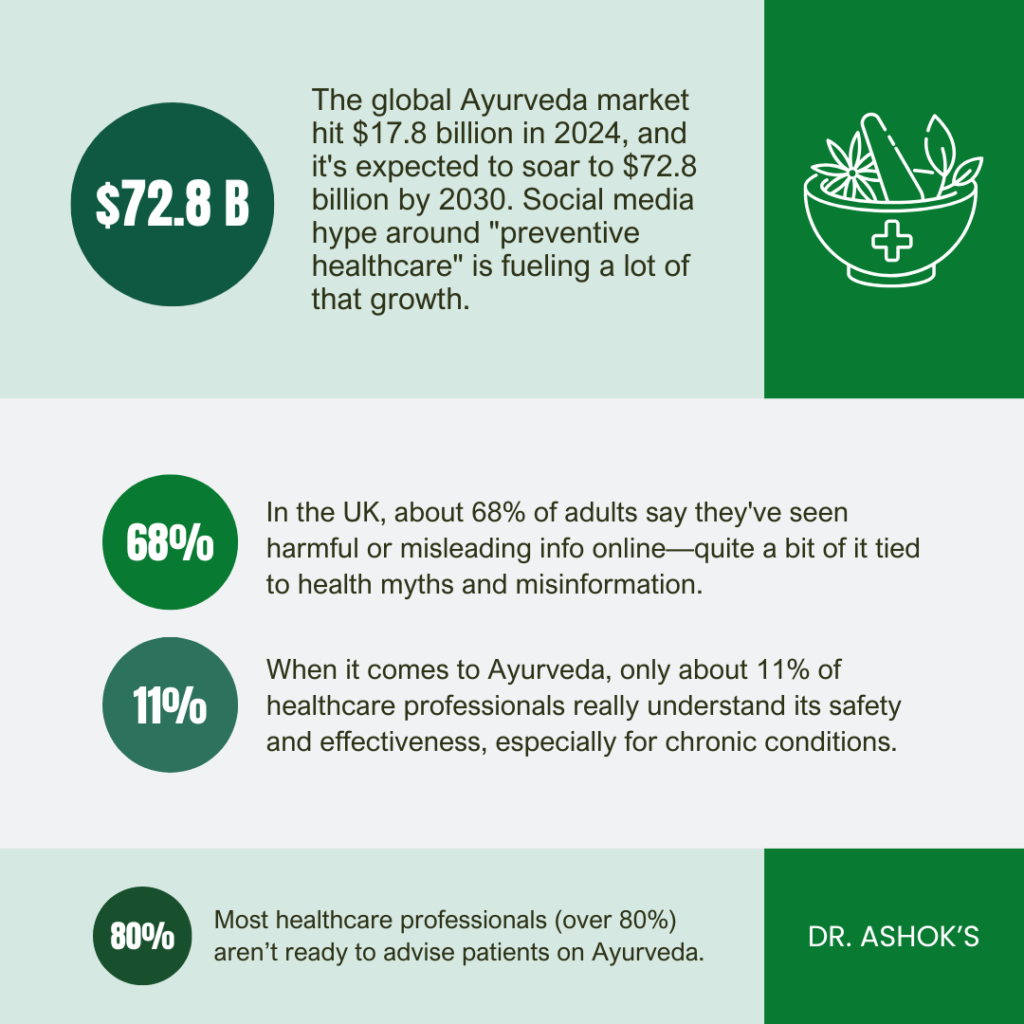
- The global Ayurveda market hit $17.8 billion in 2024, and it’s expected to soar to $72.8 billion by 2030. Social media hype around “preventive healthcare” is fueling a lot of that growth.
- In the UK, about 68% of adults say they’ve seen harmful or misleading info online—quite a bit of it tied to health myths and misinformation.
- When it comes to Ayurveda, only about 11% of healthcare professionals really understand its safety and effectiveness, especially for chronic conditions.
- Most healthcare professionals (over 80%) aren’t ready to advise patients on Ayurveda.
Understanding Ayurveda and Its Principles
Ayurveda, derived from the Sanskrit term meaning “science of life,” is one of the oldest known medical systems, originating in India over 5,000 years ago. Its main goal is to harmonize the body, mind, and spirit, promoting overall health and well-being. Unlike conventional medicine, which typically targets symptoms, Ayurveda seeks to uncover the underlying causes of health problems. Understanding the principles of Ayurveda is essential for appreciating its benefits and how it can be applied in everyday life.
Core Principles of Ayurveda
In this section, we will explore the foundational principles that guide Ayurvedic practice.
- The Three Doshas: Vata, Pitta, and Kapha are the three primary doshas that influence both our physical and mental well-being. Each dosha corresponds to specific bodily functions and personality traits. For example, Vata is linked to movement and creativity, Pitta relates to metabolism and intellect, while Kapha is associated with structure and emotional stability. By understanding these doshas, practitioners can figure out someone’s natural inclinations and spot any imbalances that might impact their health.
- The Five Elements (Pancha Mahabhuta): According to Ayurveda, the whole universe is made up of five essential elements: earth, water, fire, air, and space. These elements interact and combine in different ways within the body to create the three doshas. This elemental framework helps us understand how outside factors like our environment and diet can affect our internal balance.
- Balance and Harmony: For Ayurveda, being healthy means your doshas are in harmony. Imbalances—whether caused by lifestyle choices, eating habits, or external influences—can disrupt this harmony, leading to health issues or chronic conditions. So, Ayurveda focuses on personalized plans, like special diets, daily routines, and practices like meditation, to maintain optimal balance.
Ayurvedic Diagnosis and Treatments
When you go for Ayurvedic care, it begins with a thorough evaluation of an individual’s overall constitution (called Prakriti) along with any existing imbalances (called Vikriti). Practitioners use old, proven diagnostic methods that provide valuable insights into how the body functions and what it needs.
Diagnostic Approaches:
Ayurvedic doctors check your pulse, look at your tongue, and carefully observe your general appearance and behavior. These methods help them pick up on even small health signs, showing where your doshas might be off and what your natural tendencies are towards health or illness.
Treatment Practices:
Ayurveda uses different ways to bring your body back into balance:
- Dietary recommendations: Foods are chosen based on the individual’s dosha type, aiming to correct imbalances and boost vitality.
- Herbal treatments: Natural plants and substances are essential in Ayurvedic medicine as they help your body heal from the inside.
- Panchakarma: This detox method that gets rid of toxins from the body and refreshes your whole system using treatments like massage, oil therapies, and steam baths.
- Yoga and meditation: These mind-body practices are super important for calming your emotions and making your physical health stronger, all in line with Ayurvedic principles.
Modern Applications of Ayurveda
Even today, Ayurveda is still very relevant as it integrates with modern healthcare systems worldwide. More and more researchers are looking into how well it works for long-term problems like arthritis, diabetes, and gut issues. You’ll find wellness centers, spas, and even regular health professionals starting to use Ayurvedic ideas in their services, from advice on what to eat to yoga classes. This growing acceptance just shows that people are realizing how valuable Ayurveda can be for staying healthy and living a better life.
The Rise of Misinformation about Ayurveda on Social Media
With the rise of social media, sharing information has become quicker than ever. This has created a mixed situation for Ayurveda. On one side, it has made information more accessible and raised awareness about holistic health. On the other side, it has led to the spread of unverified claims, sensationalized content, and even harmful advice
Many influencers and self-proclaimed experts promote Ayurveda without proper credentials or understanding, which confuses followers. The lack of regulation in the wellness industry allows misleading information to flourish. This makes it important for consumers to identify trustworthy sources.
Common Myths / Misconceptions vs. Facts about Ayurveda
There are many misconceptions about Ayurveda circulating online, which can create confusion for those interested in its practices. Here are some of the most prevalent myths / misconceptions:
Myth / Misconception | Fact |
All Ayurvedic practices are safe | While many Ayurvedic practices can be beneficial, they aren’t suitable for everyone. It’s crucial to consult a qualified practitioner who can tailor treatments to meet individual needs. |
Ayurveda is just a fad | Some people think Ayurveda is merely a trend, ignoring its deep historical roots and the extensive research that supports it. |
Ayurveda is anti-science | Critics often claim that Ayurveda lacks scientific validation, but they overlook the increasing amount of research that supports its effectiveness. |
Ayurveda is just herbal medicine | Many people think Ayurveda is only about herbal remedies, but it includes much more. Ayurveda consists of dietary recommendations, lifestyle changes, yoga, meditation, and detoxification practices. |
Ayurveda is outdated | In reality, Ayurveda is constantly evolving and integrating modern research. |
Anyone can practice or self-medicate with Ayurveda | Self-medication can be risky. An authentic Ayurvedic treatment is highly personalized, based on an individual’s constitution (prakriti), and should be prescribed by a certified practitioner. |
Only vegetarians can follow Ayurveda | Ayurveda is flexible. While it encourages a balanced diet and acknowledges the use of meat in certain medicinal contexts for strength and healing, it emphasizes individual constitution (prakriti) over strict vegetarianism. |
Ayurveda can cure everything, including cancer | Ayurveda is effective for managing chronic and complex diseases, such as joint pain, digestive issues, skin conditions, and lifestyle disorders like diabetes. However, for acute emergencies, allopathy is often preferred. |
Ayurveda works slowly | Ayurveda emphasizes long-term healing instead of merely managing symptoms. That said, some Ayurvedic treatments can provide quick relief, particularly for acute issues. The pace of recovery varies based on how long the condition has persisted. |
Ayurvedic medicines never expire | Like any other medicines, Ayurvedic medicines have a shelf life. While some (like certain oils or fermented medicines) improve with age, most herbs tend to lose their effectiveness or degrade as time passes. |
Ayurveda medicine works for everyone (one-size-fits-all). | In reality, Ayurveda is highly individualized. Treatments are customized to fit a person’s unique body type (Prakriti), which includes Vata, Pitta, or Kapha, rather than simply addressing symptoms. |
Ayurveda is only for old people | This practice is preventive and curative, suitable for individuals of all ages, from babies to seniors. |
One “Dosha Quiz” determines your permanent body type | Your birth constitution (Prakriti) is fixed, but your current state of imbalance (Vikriti) fluctuates with age, seasons, and environmental factors. A true diagnosis requires professional consultation, not just an online quiz. |
All Ayurvedic products in the UK are strictly regulated by the NHS | Currently, Ayurveda is not a regulated profession in the UK. While some products must meet Traditional Herbal Registration (THR) standards for safety, many are sold as food supplements with less oversight. |
Ayurveda is a “religious” practice linked only to Hinduism | Although it originated in ancient India, Ayurveda is a secular health science based on observation and nature that anyone can practice, regardless of faith. |
Consequences of Misinformation About Ayurveda
The spread of misinformation regarding Ayurveda can lead to significant consequences for both individuals and the overall healthcare system:
- Misdiagnosis and ineffective treatments: People might turn to unverified remedies, which can result in untreated health issues or even worsen their conditions.
- Discrediting qualified practitioners: Misinformation can undermine the credibility of trained Ayurvedic professionals, prompting potential patients to seek help from unqualified individuals.
- Public distrust: As myths circulate, skepticism towards genuine Ayurvedic practices may increase, making it harder for these methods to be recognized as valid healthcare options.
- Economic impact: Misinformation can discourage investment and research in Ayurveda, restricting its potential advantages in the global health market.
Strategies to Combat Ayurveda Misinformation
Addressing misinformation about Ayurveda requires a comprehensive strategy that includes scientific validation, tighter regulations on marketing practices, and proactive education from qualified professionals. Important tactics involve reinterpreting traditional ideas in a way that is backed by evidence, limiting unfounded claims about immunity, and encouraging critical thinking to help people distinguish between genuine knowledge and commercialized pseudoscience.
Evidence-Based Validation (“Scientization”)
- Clinical Research: Subject Ayurvedic concepts like dosa, agni, and ojas to thorough scientific scrutiny and clinical trials instead of relying solely on traditional interpretations.
- Standardization: Use research platforms, such as the AYUSH Research Portal, to document and promote practices in Ayurveda that are backed by evidence.
- Integration with Modern Science: By reframing core concepts as testable ideas, Ayurveda can shift away from being labeled as “officially recognized pseudoscience.”
Marketing and Product Regulation
- Prohibit Unsubstantiated Claims: Ban advertisements that assert Ayurvedic products can cure serious illnesses, as highlighted by the Ministry of Ayush.
- Mandatory Expert Consultation: Encourage the notion that Ayurvedic products and therapies should only be used under the supervision of trained professionals to prevent toxicity and adverse effects.
- Eliminate Misleading “Curative” Marketing: Address the spread of misinformation regarding immunity boosters that lack solid scientific support.
Active Advocacy by Qualified Experts
- Countering “Fake” Experts: Qualified Ayurvedic practitioners should actively engage on social media and digital platforms to share accurate information and counter misleading advice often propagated by unqualified individuals.
- Workshops and Public Awareness: Organize seminars and educational campaigns to help the public differentiate between genuine, qualified advice and commercial misinformation.
Digital Literacy and Critical Analysis
- Spotting Misinformation: Teach consumers to verify the credentials of information creators, assess original sources, and avoid products promoted on social media that lack scientific validation.
- Debunking Myths: Actively challenge claims of “pseudoscience” or misinformation regarding food, traditional practices, and treatments through open debate.
Ethical Regulatory Frameworks
- Combating “Misinformation Governmentality”: This involves addressing situations where regulatory agencies might inadvertently spread unverified information, such as using their official channels to promote unproven treatments.
- Strict Oversight: It’s crucial to ensure that Ayurveda products are marketed based on reliable evidence, steering clear of exploiting consumer fears, particularly as we witnessed during the COVID-19 pandemic.
Making Informed Decisions about Ayurveda
It’s important for people to make well-informed choices about Ayurveda. This means looking for trustworthy information, talking to qualified practitioners, and being open to practices backed by evidence. By doing this, they can truly benefit from this ancient healing system while avoiding the pitfalls of misinformation.