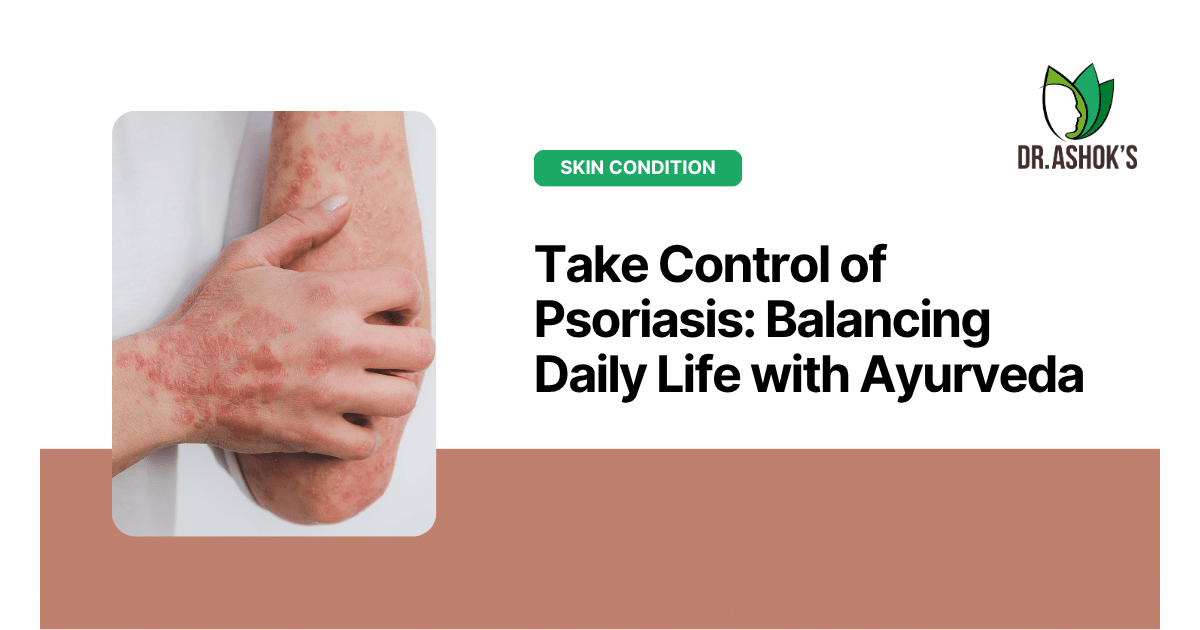
Take Control of Psoriasis: Balancing Daily Life with Ayurveda
Psoriasis is a chronic psychosomatic autoimmune inflammatory disease that affects millions, causing constant discomfort, frustrating cycles of flare-ups and emotional distress. Conventional treatments often offer only temporary relief with debilitating side effects.
In this blog post, we explore the profound impact of psoriasis on daily life and introduce Ayurveda, an ancient holistic healing system that addresses symptoms at their root. We explore conventional treatments and the reasons why Ayurveda leads, including dietary tips and healing herbs, empowering readers to reclaim control over their health and improve their quality of life.
Global & UK Psoriasis: Key Stats, Impacts & Emerging Trends
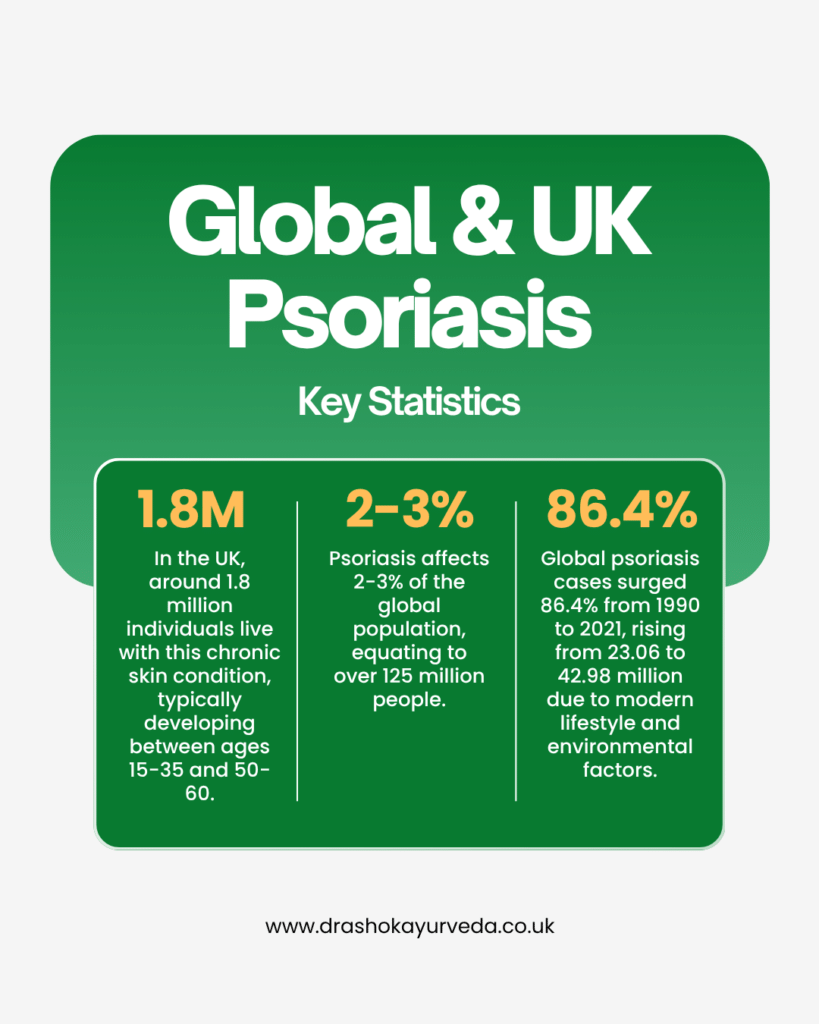
Key Statistics
- Psoriasis affects 2-3% of the global population, equating to over 125 million people.
- Global psoriasis cases surged 86.4% from 1990 to 2021, rising from 23.06 to 42.98 million due to modern lifestyle and environmental factors.
- In the UK, around 1.8 million individuals live with this chronic skin condition, typically developing between ages 15-35 and 50-60.
Impacts
- Quality of Life: Psoriasis impairs quality of life to a degree comparable with cancer & heart disease, severely affecting sleep, work productivity, and self-esteem.
- Mental Health: Strong links exist between psoriasis and mental health issues, with increased rates of depression and anxiety due to stigma and visible symptoms.
- Comorbidities: Up to 30% of psoriasis patients may also suffer from psoriatic arthritis, along with risks of cardiovascular disease and metabolic syndrome.
- Economic Burden: The costs of psoriasis treatment and management impose a substantial economic strain on both healthcare systems and individuals.
Emerging Trends
- Shift towards alternative medicines for sustainable, natural symptom management.
- Over 60% of patients report significant emotional distress related to their condition.
This highlights the urgent need for effective management strategies and support for those living with psoriasis.
Psoriasis Care: Why Ayurveda Outperforms Conventional Treatments
Conventional Treatment Options
Conventional medicine primarily focuses on managing the symptoms of psoriasis. While effective for many, these treatments often do not address the root cause and can have significant side effects.
Conventional treatment options include:
- Topical treatments: Corticosteroids, vitamin D analogues, retinoids, calcineurin inhibitors, and salicylic acid creams are applied directly to the skin to reduce inflammation and slow skin cell growth.
- Phototherapy: Controlled exposure to ultraviolet (UV) light (UVA or UVB) can slow skin cell turnover.
- Systemic medications: Oral or injectable drugs, such as methotrexate, ciclosporin, and acitretin, work throughout the body to suppress the immune system or slow cell growth.
- Biologics: These are advanced injectable drugs that target specific parts of the immune system involved in psoriasis. They offer significant relief for severe cases but often come with higher costs and the potential for serious side effects.
While conventional treatments may provide symptom relief, they present several limitations:
- Symptom Management: Most conventional treatments focus on managing symptoms rather than addressing the underlying imbalance.
- Side Effects: Many medications can cause adverse effects, ranging from skin thinning and irritation to kidney damage, liver problems, and increased risk of infections.
- Rebound Effect: Discontinuation of some treatments can lead to flare-ups worse than the initial condition.
- Not Personalized: Treatments are often standardized, failing to consider individual body types, lifestyles, and specific triggers.
Why Ayurveda Leads in Psoriasis Care
Ayurveda, the ancient Indian medical science, takes a radically different, holistic approach to psoriasis. It views the condition as a systemic disorder rather than merely a skin problem.
Holistic Perspective: Ayurveda classifies psoriasis (often correlated with ‘Kitibha’ or ‘Ekakushta’) as a Vata-Kapha dominant disorder, often exacerbated by a disturbed Pitta dosha. This approach considers impaired digestion (Agni) and the accumulation of toxins (Ama) as contributing factors.
Ayurveda’s Approach:
- Root Cause Treatment: Ayurveda aims to purify the blood, detoxify the body, balance aggravated doshas, improve digestion, and strengthen the immune system from within.
- Personalized Care: Treatments are highly individualized, tailored to the patient’s unique constitution (Prakriti) and the specific manifestation of psoriasis.
- Natural & Sustainable: Utilizes natural herbs, specialized detoxification therapies (Panchakarma), dietary modifications, and lifestyle changes, often with minimal to no side effects.
- Long-Term Relief: Focuses on restoring the body’s natural healing capabilities for more sustainable and lasting relief, reducing the frequency and intensity of flare-ups.
- Mind-Body Balance: Incorporates practices like yoga and meditation to address stress, a known trigger for psoriasis.
In summary, while conventional treatments may offer temporary relief, Ayurveda’s holistic approach addresses the root causes and promotes long-term wellness, making it a compelling option for managing psoriasis effectively.
How Dr. Ashok’s Ayurvedic Clinic Makes a Difference
At Dr. Ashok’s Ayurvedic Clinic, we offer lasting relief for psoriasis through authentic Ayurvedic principles and modern diagnostics.
Unique Differentiators:
- Expert Guidance: Led by Dr. Ashok, a compassionate Ayurvedic physician specializing in chronic skin conditions.
- Personalized Treatment Plans: Customized plans based on thorough consultations, including herbal formulations, dietary recommendations, and appropriate Panchakarma therapies.
- Comprehensive Panchakarma Therapies: Specialized detoxification treatments like Virechana, Vamana, and Rakta Mokshana to cleanse toxins and balance doshas.
- Integrative Approach: Clear communication with patients about their conventional treatments for a holistic care experience.
- Education and Empowerment: Providing knowledge and practical tools for proactive health management.
- Focus on Sustained Health: Aiming to restore overall health and improve quality of life, reducing dependency on ongoing medication.
Dr. Ashok’s Ayurvedic Clinic is dedicated to delivering effective, holistic solutions for psoriasis and enhancing patient well-being. Explore our Psoriasis Care Plans.
Client Journey: Mr. Sharma’s Transformation
Mr. Sharma, a 36-year-old software professional, struggled with chronic plaque psoriasis for 8 years, relying heavily on harsh steroids. After starting a comprehensive 6-month treatment plan at Dr. Ashok’s Ayurvedic Clinic – featuring customized herbal medications and Panchakarma therapies – he experienced a remarkable 90% reduction in silvery scales and restored skin texture. Today, he has been symptom-free for over a year, enjoying a renewed quality of life.
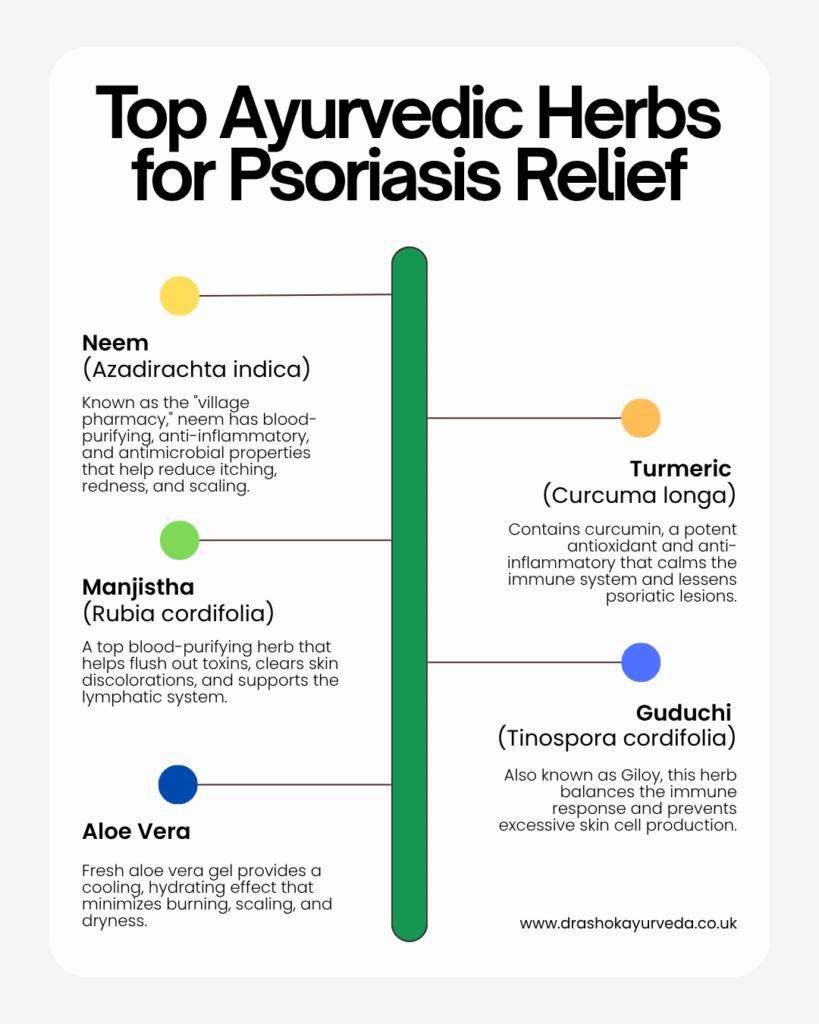
Top Ayurvedic Herbs for Psoriasis Relief
- Neem (Azadirachta indica): Known as the “village pharmacy,” neem has blood-purifying, anti-inflammatory, and antimicrobial properties that help reduce itching, redness, and scaling.
- Turmeric (Curcuma longa): Contains curcumin, a potent antioxidant and anti-inflammatory that calms the immune system and lessens psoriatic lesions.
- Manjistha (Rubia cordifolia): A top blood-purifying herb that helps flush out toxins, clears skin discolorations, and supports the lymphatic system.
- Guduchi (Tinospora cordifolia): Also known as Giloy, this herb balances the immune response and prevents excessive skin cell production.
- Aloe Vera: Fresh aloe vera gel provides a cooling, hydrating effect that minimizes burning, scaling, and dryness.
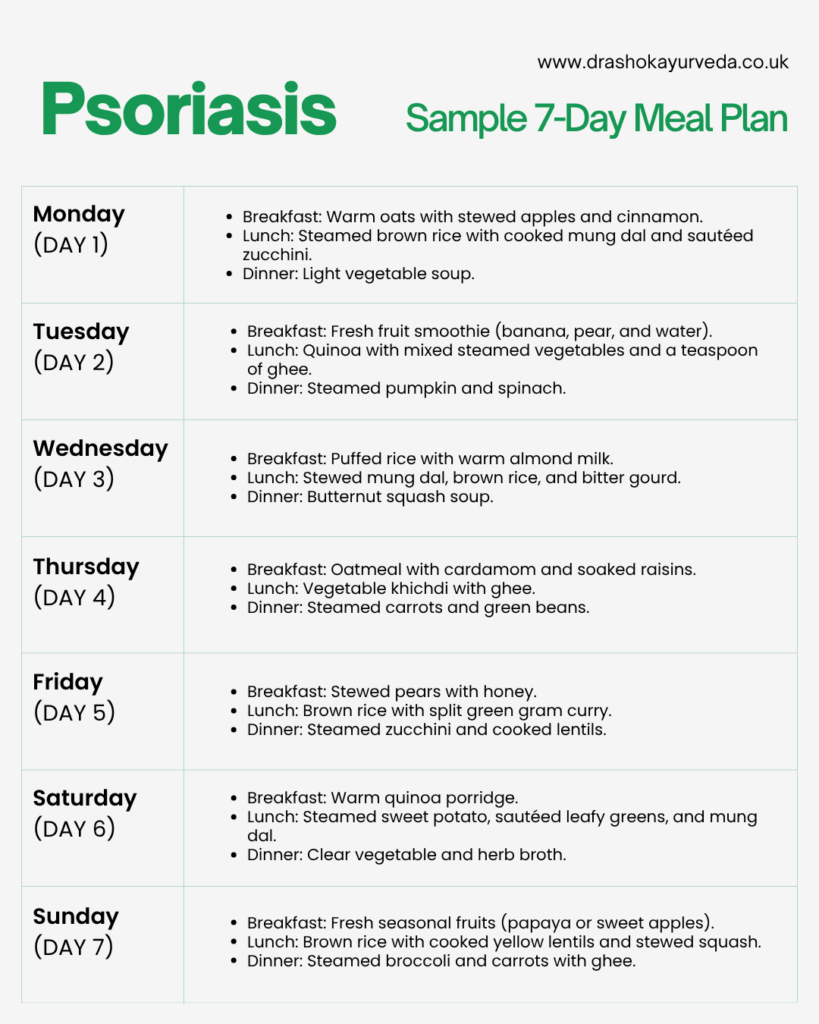
Your 7-Day Ayurvedic Psoriasis Diet Guide
In Ayurveda, diet is fundamental for managing chronic conditions. Avoiding incompatible foods (Viruddha Ahara) can help prevent flare-ups. Here’s a structured 7-day diet guide to support healing:
What to Avoid (Aggravating Foods)
- Dairy: Milk and heavy cheeses can aggravate Kapha.
- Nightshade Vegetables: Tomatoes, eggplants, potatoes, and bell peppers may trigger inflammation.
- Sour, Salty, and Fermented Foods: Pickles and highly fermented foods.
- Red Meat and Seafood: Can overload the digestive system.
- Processed Foods & Sugars: Contributes to systemic inflammation.
- Alcohol and Caffeine: Dehydrate the skin and worsen Pitta dosha.
What to Eat (Healing Foods)
- Fresh, Seasonal Fruits: Sweet apples, pears, and pomegranates.
- Easily Digestible Grains: Cooked quinoa, brown rice, and oats.
- Soothing Vegetables: Bitter gourds, zucchini, and steamed leafy greens.
- Legumes: Split yellow mung dal for a detoxifying digestive system.
- Healthy Fats: Small amounts of organic cow’s ghee for internal lubrication.
Sample 7-Day Meal Plan
|
Monday |
|
|
Tuesday |
|
|
Wednesday |
|
|
Thursday |
|
|
Friday |
|
|
Saturday |
|
|
Sunday |
|
By adopting a holistic approach and aligning your diet with Ayurvedic principles, you can take significant steps toward regaining control over your skin and enhancing your daily life.